
Australian Industry Group is monitoring the evolving impacts of the conflict in the Middle East on Australia's fuel supply and broader supply chains. We will use this page to keep members informed with timely updates, key developments and practical guidance as the situation unfolds.
Our team is actively liaising with relevant Commonwealth and state agencies and maintaining ongoing consultation with members who are, or may be, affected – so that policy responses and industry support are informed by real‑world conditions.
We will publish updates and useful information here as they become available, and we encourage members to contact our policy team with on‑the‑ground insights – such as emerging delays, freight availability issues, price volatility, supplier challenges or operational adjustments you are making. Your input helps shape coordinated, evidence‑based advocacy and support.
Please get in touch at industry.policy@australianindustrygroup.com.au.
The conflict in the Middle East has stopped shipment of about 20% of global oil supply, but with significant shipping times to bring oil to other regions including Australia, this physical disruption has not yet flowed through to any change in Australia’s energy supply. Australia and other nations have agreed to release a significant volume of oil from global emergency stockpiles, which will ease the loss of supply for a period. It is unclear how long the Middle Eastern crisis will last, nor how much physical damage will be done to energy assets. An extended period of disruption is possible.
Global prices for oil have risen substantially and may well rise further. Australian prices for oil products like diesel, petrol and aviation turbine fuel have already risen, in part because of increased demand driven by anxiety about future supply and price.
Price rises will reduce demand. If and when physical supply of oil products to the Australian market shrinks, prices would rise further in order to destroy enough demand to balance. However, the Federal Government also has emergency powers to institute transport fuel rationing if necessary. While the Government has said they do not anticipate needing to invoke these powers, an emergency plan for fuel crisis scenarios agreed in 2016 would impose maximum daily fuel purchase values on motorists, with different limits for light vehicles, rigid trucks and articulated trucks. The plan would exempt specified essential users, including ambulances; corrections; fire and rescue; police; public transport; emergency services; and taxis. If rationing is introduced, the 2016 rules may be updated.
Most fuel consumed in Australia is refined elsewhere, and most of the oil input to Australian refineries is imported. We are highly exposed to movements in international fuel supply.
Most of the oil we use is consumed in transport (73%), especially road transport (53%).
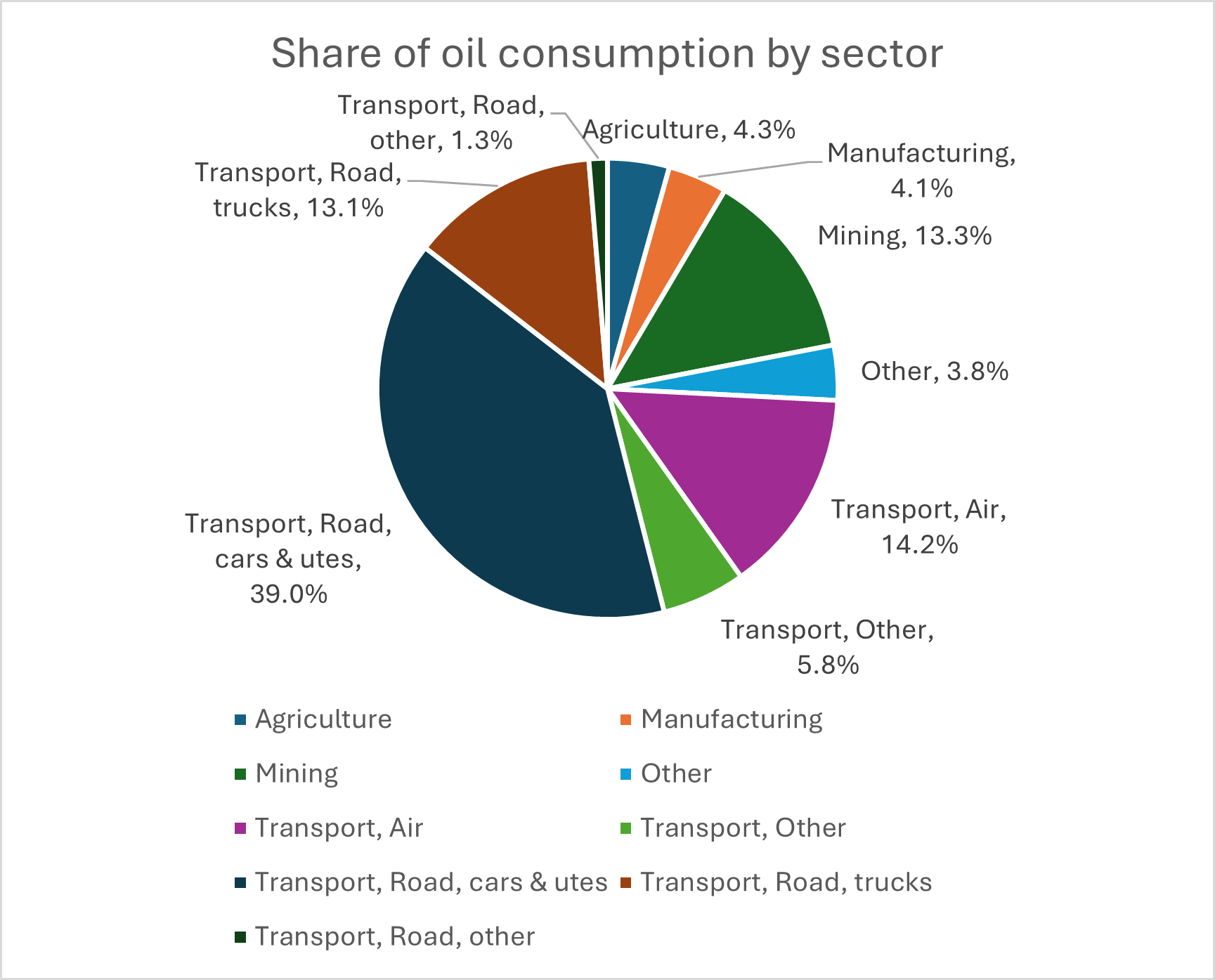
Figure 1: Share of oil consumption by sector (derived by Australian Industry Group from data published by DCCEEW and DISR)
At present considerable attention is focussed on prices and availability for diesel fuel, which accounts for 56% of Australian oil product consumption. Diesel use is mostly in light vehicles, trucking and mining.
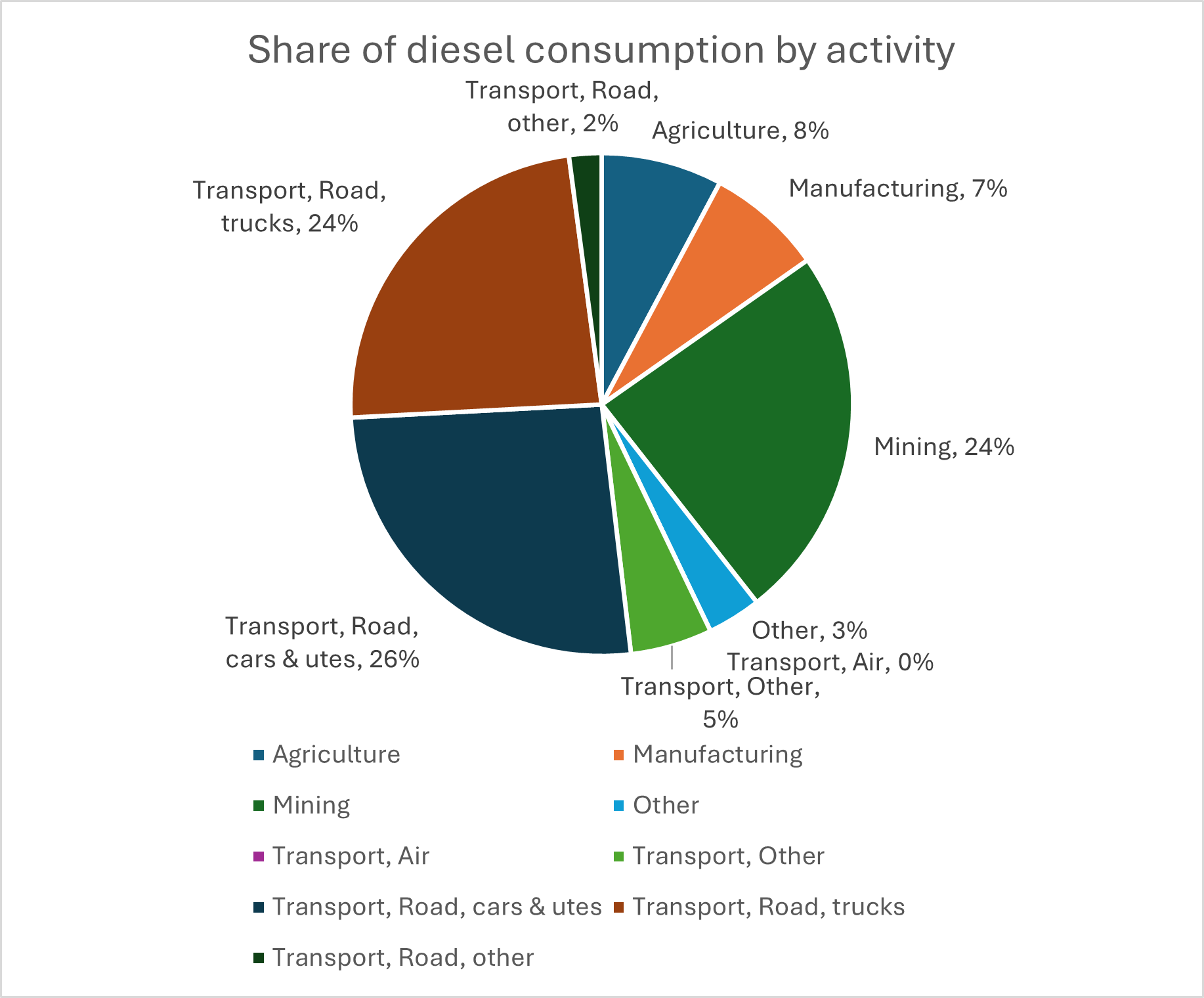
Figure 2: Share of diesel consumption by activity (derived by Australian Industry Group from data published by DCCEEW and DISR)
While fuel rationing has not been invoked, prices are rising and preparing to reduce your exposure is timely. Different options will be relevant to different businesses, but may include:
Overseas, prices for natural gas and electricity have been significantly affected already, given the connection between oil and gas prices in many contracts, the direct impact on gas exports from the Middle East, and the role that gas plays in many electricity systems.
In 2022-23 the Russian invasion of Ukraine sent gas and electricity prices soaring internationally and within Australia. Overseas price rises in the current crisis have so far been significant, but much smaller.
Within Australia, we have not yet seen any increase in spot prices for natural gas or electricity associated with the conflict. Electricity futures prices have also been unaffected so far. Australian Industry Group is monitoring the situation.
If and when natural gas or electricity prices rise, this will affect different energy users at different times depending on the terms and duration of their energy contracts. Few users have much direct exposure to spot prices.
Since 2022-23 Australian electricity systems have seen a large and rapidly growing addition of grid-scale and household-scale battery energy storage systems. This has eroded the role of gas generation in meeting daily flexibility needs, though the backup role of gas remains very important. This has also weakened the connection between gas prices and wholesale electricity prices.
Government Factsheet: Australia's Fuel Security During the Middle East Conflict
Latest fuel stock levels (reported weekly)
Weekly fuel price monitoring update (ACCC)
Appointment of Fuel Supply Taskforce Coordinator
DBrief podcast: How the Iran conflict is rippling through Australia’s fuel market and supply chains
For more assistance, please contact Louise McGrath, Head of Industry Development and Policy.


