Be clear about how much capital you need and what it will be used for, those who attended an Australian Industry Group webinar on capital for growth heard this week.
The online discussion brought together the leaders of four organisations that play a central role in financing Australian business.
Chaired by our Chief Executive, Innes Willox, the panel explored how growth capital, debt, equity and impact finance are flowing into Australian businesses at a time when productivity, sovereign capability and supply chain resilience have never mattered more.
Joining the discussion were:
Together, these organisations represent a substantial pool of patient, growth-oriented capital.
Mr Gall described the $15 billion National Reconstruction Fund as “Australia’s sovereign manufacturing fund”.
It invests across seven priority areas, from renewables, defence and critical minerals to medical science, agriculture and enabling technologies.
The NRF can deploy senior debt right through to ordinary equity. It's designed to complement, not displace, private capital.
“If private capital is available, go down that route," Mr Gall said.
"The question we always ask is, why the NRF, and what more value can we bring?”
The Australian Business Growth Fund is industry agnostic and writes initial cheques of $5 million to $15 million, taking minority equity in established SMEs turning over between $10 million and $100 million.
Mr Healy said ABGF backs founders rather than displacing them.
“As a minority shareholder, we’re not in control," he said.
"The founder still has control. Decisions like the timing of an exit are entirely at the founder’s discretion.”
SEFA is a specialist lender to not-for-profits, social enterprises and purpose-driven businesses.
With an evergreen pool of about $20 million, SEFA has made more than 75 loans and unlocked over $160 million in impact capital.
“Each of our loans is bespoke,” Ms Wong said.
"Social outcomes are a threshold consideration. We have to be satisfied that positive impact is embedded in the business as a core part of its mission.”
The Australian Investment Council is the peak body for private equity and venture capital. Its member funds back more than 1100 businesses, support about 600,000 full time jobs and contribute roughly 3% of GDP.
Mr Stuart said private equity was fundamentally about partnering for growth.
“The predominant generator of returns is profit growth," he said.
"We look for a good business that's well positioned in its market — one that’s just not yet operating to full potential, and we work with the owner to remove the constraint.”
While each fund operates in a different part of the capital stack, the panel converged on remarkably similar advice.
Be clear about how much capital you need and exactly what it will be used for. Know your competitive position, industry dynamics and the quality of your management team. Get your financials in order and engage a good adviser.
Mr Healy said: "Roughly 90% of an investor’s effort comes after the cheque is written. The money is just the key to open the door to the growth opportunity.”
Founders should not be afraid to be specific, Mr Gall said.
Of about 1400 applications received, the NRF has been struck by how many describe a business without ever clearly asking for anything.
Ms Wong said the biggest single mistake was not approaching the right lender at all.
“I’ve heard so many times: 'I spoke to the bank; they said no, and I thought that was it for me',” she said.
Mr Stuart’s advice was to “lean into the discomfort” of hard questions early; a mismatch surfaced in week one is far less expensive than one surfaced in year three.
Looking ahead, the panel was united on three themes: sovereign capability and supply chain resilience will remain central; productivity must be a relentless focus inside every business and founders should resist the urge to defer capital conversations until uncertainty lifts.
Mr Healy said: “Great businesses think about how they adjust, flex and build resilience. Have the conversation early. Even if it leads nowhere, you’ll come away with a clearer view of how to plan the next one or two years.”
The conversation also touched on the NRF’s new Economic Resilience Program, which is deploying interest-free loans through partner banks to logistics, plastics, packaging and fertiliser businesses impacted by the current fuel crisis.
About 500 applications have been processed in the program’s first two weeks.
For contact details and further information, visit each of the funds featured today:
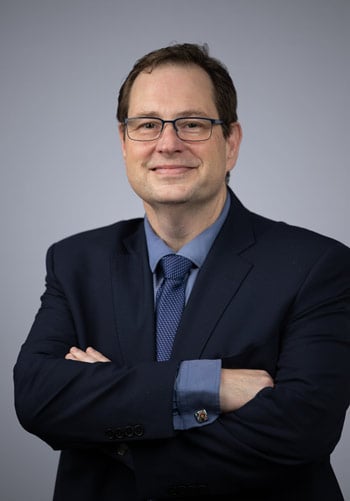
David is Director of Emerging Industries and Innovation at Australian Industry Group.
He has been part of Australia’s innovation ecosystem for more than 15 years and has worked at the executive level across multiple industries in large and small organisations to facilitate innovative solutions to complex problems.
David has maximised opportunities for Australian industry in $88 billion of major projects, delivered financial assistance of more than $22 million to innovative SMEs and pulled together over 150 commercially astute leading-edge research/industry collaborations that have resulted in novel technology and jobs of the future.